
Hypnosis consultations for Sleep and Insomnia
It is 11:30pm, you are exhausted, and yet the moment the light goes out the brain switches everything back on: the day, tomorrow's list of tasks… And the question that makes it all worse: "am I going to sleep tonight?"
Our hypnotherapists work with people who want to find natural sleep again, anywhere in France: in the practice in Paris, Lille, Brunoy, Strasbourg, Saverne, Voiron, Montpellier, Saint-Gilles, or by video. Trouble falling asleep, waking during the night, and a dependence on sleeping pills they would like to be free of…


Understanding Sleep Difficulties
Insomnia in France: a lot of sleepless nights, a lot of sleeping pills
Insomnia affects a large share of the French population, and the most common response is still medication: France remains one of the heaviest consumers of sleeping pills and benzodiazepines. These treatments are useful now and then under medical supervision, but they do not retrain sleep, they replace it. And dependence sets in, along with the fear of never again knowing how to sleep "without."
What we believe, in line with plain common-sense guidance: sleeping pills are managed with your doctor; natural sleep, on the other hand, can be retrained, and that is our work.
Why you no longer sleep: the vicious circle of the fear of not sleeping
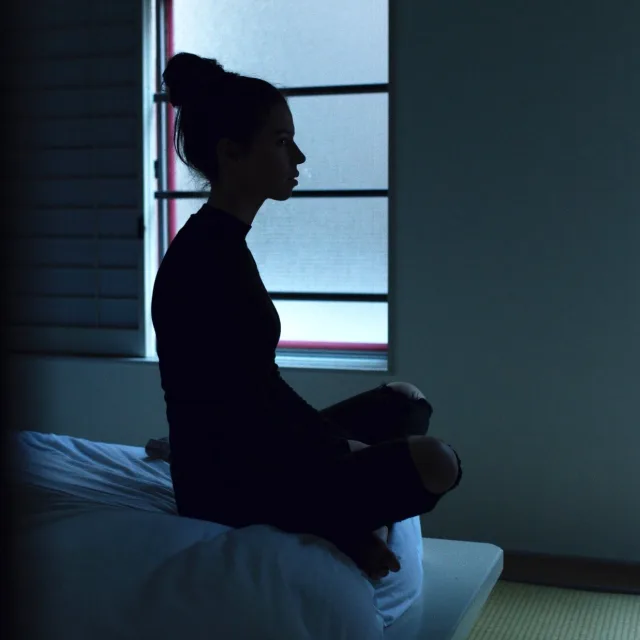
In the great majority of chronic insomnia, the original cause (a stress, an event) has sometimes long since gone. What remains is the learning: going to bed has become an issue, you monitor your own falling asleep, you count the hours left… and that monitoring is exactly the opposite of the state required for sleeping.
The bed ends up associated with the struggle: "bed = fight," and the brain honours that faithfully every evening. The good news: what has been learned can be unlearned.
To understand this mechanism in detail and what the research says, read our full guide on solutionshypnose.com.
Video transcript
Sleep disorders are one of the most frequent reasons for consultation with a hypnotherapist. There are different forms: problems going to bed, falling asleep, frequent nocturnal awakenings, difficulty going back to sleep afterwards, ultra morning awakenings... Sleep disorders can be related to hormonal imbalances, unbalanced lifestyles, for example with working the nightshift- or jet lag. But most often they are a symptom of mental or emotional stress, anxiety, or thoughts that are run in loop in your head. If the sleep disorder is caused by a post-traumatic stress, in this case you should consult a psychologist or psychotherapist. The problem - and if you're prone to insomnia you know - is that the more you think about it, the worse it gets.
I have to sleep, I'm going to be tired tomorrow... and so you roll in your bed or you get up to get a glass of water, or to go to the toilet. So why use hypnosis? Contrary to the shows and movies of the 30s, we are not going to look you straight in the eyes and say "and from now on you will sleep like a baby"! That would be the best way to get upset! The goal of hypnosis is to allow you of course to relax deeply which already feels good. But above all to let your imaginative and creative mind take over your rational mind that has already turned the problem 12000 times worst in your head. To understand the ramifications of the problem, possibly the benefits of these sleep disorders even if it seems paradoxical, or to work with symbols, and metaphors.
Let me take an example: a recently retired lady can't fall asleep at night, she always has something to do. Futile things, as she says it herself. While in session with a hypnotherapist, she realizes that she has very boring new life, and when it is time to go to bed, she wants to avoid thinking that she had done nothing with her day. We also have young and very active clients, each case is different... So if you are prone to sleep difficulties, if you wake up in the early morning already tired before you even start the day, try therapeutic hypnosis. The team of hypnotherapists of Solutions Hypnose is here to accompany you. In person or by video, it also works very well. Make an appointment now to create the life you want through hypnosis! See you soon.
Hypnotherapy is a complementary form of support and does not replace medical advice, diagnosis, or treatment. If you have any concerns about your health, please consult a physician first.
Hypnotherapy for Sleep
Our support: retraining sleep
In practice, we work on:
- Deep physiological relaxation: retraining the body to swing from alert mode into rest mode, then anchoring it for bedtime.
- Settling the rumination: closing the day before the bedroom, letting thoughts pass without grabbing them.
- Deprogramming the fear of not sleeping: giving the bed back its status as a place of rest.
- And self-hypnosis: the tool you keep for life, for bedtime as much as for the 3am waking.
Hypnosis also combines very well with validated approaches such as cognitive behavioural therapy for insomnia (CBT-I), and with your doctor's follow-up.
Reducing sleeping pills: maybe, but in the right order
This is the request we hear most often in France: "I want to stop the sleeping pills, but I am afraid I will not sleep at all."
What hypnosis brings within that frame: rebuilding the natural sleep mechanisms in parallel (relaxation, confidence, internal rituals) so that each step down is workable. The doctor sets the timetable, we make the road possible. Talk to your GP about it: this works all the better when both sides own it.
What our clients say

« I had serious sleep problems. Thanks to hypnosis, things are much better now. Thank you Patricia »
Bernadette, client of Patricia Jouannet
« I took Zopiclone for 10 years just to be able to sleep 5 hours a night. After two sessions, I now sleep over 7 hours without medication. »
Jonathan, client of Annie Mayrand
« Florence put me at ease and made me feel comfortable right from the first session. My insomnia problems improved significantly in just 2-3 sessions. I highly recommend her! »
Sarah, client of Florence Aton
Find a Hypnotherapist for Sleep Difficulties near you
In Office or Online Across France
Offices in Paris, Lille…
And if you live far away or elsewhere in the world, online sessions work very well. Evening slots available.


Frequently asked questions about hypnosis for sleep and insomnia
Yes, on one non-negotiable condition. Coming off is decided and steered with your doctor, never on your own: stopping some treatments abruptly is dangerous. Within that frame, hypnosis rebuilds what the medication had put on hold: the body's ability to come down towards sleep on its own. It is the combination of the two — a medical timetable plus retrained sleep — that gets people out of the dependence for good.
Two to five as a rule: sleep is one of the areas where hypnosis gives fairly quick results, with the self-hypnosis learned in the first session gradually taking over. Long-standing insomnia, or insomnia backed by background anxiety, can take a little more (Stress & Anxiety) and combining it with medical follow-up — talk to your doctor.
Very well, in fact. Waking at 3am is ordinary for every sleeper; what turns it into two hours of insomnia is the panic and the rumination that latch onto it. The work combines a self-hypnosis tool to cross the waking calmly with deeper work so that those wakings become brief again, and forgotten by morning.
Not by France's public health insurance. Some private insurers do reimburse several sessions a year through their complementary-therapies allowance. Check your policy before the first session; we provide an invoice.
Then the priority is medical, not hypnotic. Loud snoring, pauses in breathing noticed by your partner, sleepiness during the day: talk to your doctor, who can order a sleep study. Apnoea is a serious health matter that is treated very well medically; hypnosis can only come alongside (stress, adapting to the treatment).
They relax you, which is already useful. But a generic audio knows neither your form of insomnia, nor your triggers, nor any treatment you are on. It lulls, it does not retrain. If your insomnia has lasted for months despite the recordings, that is the sign you need personal work on the vicious circle that keeps it going.
Going further
- Stress management: when the pressure is strong and constant.
- Anxiety: when the alarm runs with no present danger.
- Performance anxiety: when the pressure concentrates on one moment to get right.
Hypnotherapy is complementary well-being support: it replaces neither advice, nor treatment, nor medical or psychological follow-up, and guarantees no result. Any significant distress or persistent symptom is first a matter for a health professional.

Page written by Réjeanne LeBlanc
hypnotherapist and NLP coach
partner at Solutions Hypnose.
Updated .