
Hypnosis consultations for Children
The stomachache every Sunday evening, the monsters that come back every night, bedwetting that drags on despite your patience, bedtime that takes an hour and a half…
Children's difficulties are real, and their greatest resource for getting through them is their imagination.
Our pediatric hypnosis practitioners support children from age 4-5, in person in Paris, Brunoy, Strasbourg, Saverne, or by video anywhere in France : sessions that feel like story games where your child is the hero, with you, the parents, as partners from start to finish.


What does hypnosis look like for a child?
A hypnosis session for a child, concretely
Nothing like a stage show, or a consultation for an adult.
A child's hypnotic state is one they already know : the absorption of a story, a drawing, a film…
The practitioner builds a custom story with the child, into which suggestions for change are woven : fear of the dark becomes a dragon to be tamed, a worry gets tucked into an imaginary box, the body discovers its superpowers.
Eyes open or closed, the child moves, talks, draws — it's a playful moment they often come out of feeling proud.
To fully understand how it works (age, the parents' role, limits), read our complete guide.
Two conditions for success

- A willing child : show them the photo or introduction video of the practitioner and let them decide whether to meet "this person who tells slightly magical stories".
- Partner parents : parental consent is always required, the first meeting happens together, you have a role at home, and there's never a secret between the practitioner and the child that's kept from the parents.
From what age?
At Solutions Hypnose, we generally work with children from age 4-5 (to confirm with each practitioner).
That's the age when language is rich enough to follow a story and play along with it. Before that age, the work tends to go through the parents instead (rituals, stories to tell).
And there's no upper limit : the approach simply evolves along with the child, up through the dedicated support we offer teens.
How hypnosis can help your child

Video transcript
Hello, I'm Charlotte de Joybert, a hypnotherapist and sophrologist. I have always been of service to others, putting people at the centre of my concerns. I support adults and children with issues such as managing anxiety or certain fears, changing behaviours such as eating habits or smoking, self-image and self-confidence. I also support women during pregnancy and the postpartum period, as well as through fertility treatment.
Sophrology and hypnosis are wonderful techniques that belong to the family of brief therapies, and they can help people feel better. These techniques can also support a child's development, from early childhood to adolescence. I see children of all ages, from five or six, depending on the child's maturity and the goal, up to seventeen or eighteen for teenagers.
Children often come for different issues depending on their age: it may be bedwetting, sleep problems, self-confidence issues, and also managing anxiety, which is a theme we find at every age. I remember an eight-year-old boy who was having difficulties with his new teacher, which caused him so much anxiety that he felt like throwing up, knowing that he was also emetophobic, that is, afraid of vomiting.
He had lost confidence in himself, and it was affecting him both at school and in his activities. He no longer wanted to go to school or to his training sessions. Over the sessions, things settled down: we found breathing exercises combined with movements to help him feel confident and protected. Then we changed his perception of school, and the urge to vomit gradually faded.
Indeed, the approach and techniques used are not the same whether the child is six, twelve or sixteen. For young children, the hypnotic state comes very easily; it can even be done with their eyes open while we keep talking: I enter their world, and parents are often amazed by the changes that take place. For a primary-school child, I do shorter sessions and use images and metaphors suited to their age.
Children of this age often have trouble managing their emotions, or an issue linked to a particular event that makes them seem to regress: for example, they no longer want to sleep in their own bed, they start bedwetting, or they behave differently at home or at school. The task is then to find out how they experience things, what reassures them and how to help them accept change.
I really favour guided imagery work that speaks to them. With a teenager, on the other hand, I focus more on building trust, and I help them put tools in place to improve their self-esteem, gain confidence and master their emotions, for example through visualisation, breathing and positive affirmations. And with teenagers or young adults, we can work at greater length on deep relaxation exercises, and on beliefs and behaviours.
So now you have a few tools for understanding hypnosis in light of your child's developmental needs. For more information about hypnosis and how it can help you, get in touch with me. And the whole Solutions Hypnose team is here to support you, in person or by video, which works very well too. Feel free to ask your questions and share your experience; we'll be happy to read them.
And if you liked this video, don't forget to like and subscribe for more tips. See you soon for a new video.
Hypnotherapy is a complementary form of support and does not replace medical advice, diagnosis, or treatment. If you have any concerns about your health, please consult a physician first.
The difficulties we support most often
- Fears and nightmares. Fear of the dark, monsters, dogs, thunderstorms : when a fear settles in, the imagination that created it is also the one that can undo it (see our Fears & Phobias page).
- Bedwetting.
Common past age 5-6, and far heavier for a child to carry than one might think : shame, declined sleepovers… First step, always : a doctor's check-up, to rule out any physical cause (see one without delay if the urine has a strong odour or the child feels pain urinating). After that, hypnosis gets good results through age-appropriate control metaphors : through stories, the child learns to team up with their body, without ever feeling guilty. Our detailed article explains it all. - Sleep.
Endless time falling asleep, night wakings, bedtime rituals that never end : hypnosis installs falling-asleep rituals the child takes on almost like a game (see our Sleep page). - Fear of school.
From the knotted stomach every Sunday evening to refusing to go : tools their own size give mornings back their lightness. If the refusal is severe or the distress significant, the school staff and your doctor need to be involved. Hypnosis comes in as support, not as the sole solution. - Bullying at school, in support of the child.
Let's be straightforward about it : protecting a bullied child is the responsibility of adults : reporting to the school, official protocols… What hypnosis brings, while the adults act : repairing damaged confidence, easing fears, restoring sleep, and helping the child not conclude from this ordeal that they're "worth less". - Self-confidence and shyness.
The child who doesn't dare raise their hand, who compares themselves to others, who says "I'm no good" : confidence can be repaired, and the earlier it's addressed, the better (see our Self-Confidence page). - Anger, jealousy, major upheavals.
Emotional storms, a new sibling, a move, parents separating : these are earthquakes at a child's scale that stories help them get through and put into words.
What hypnosis doesn't replace
Pediatric hypnosis does not replace a pediatrician, a speech-language therapist, or a psychologist or child psychiatrist.
See a professional as a priority if you notice a sudden, lasting change in behaviour, withdrawal, marked regression, persistent learning difficulties (a specialized assessment is needed), an unexplained physical symptom, or significant distress.
If a diagnosis is being considered or has been made (ADHD, learning disorders…), it falls to qualified professionals.
Hypnosis can then help, as a complement and with their agreement, with stress, self-esteem, or sleep.
What our clients say
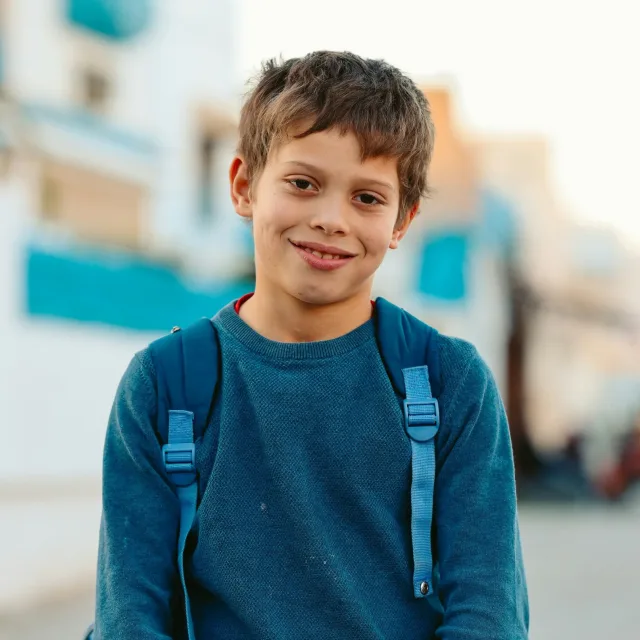
« A great approach with my son, who quickly felt at ease! Excellent results for treating his phobia! Thank you :) »
Annie
« Caring and professional with my 10-year-old daughter. A huge difference in our lives thanks to these 2 follow-ups! »
Josianne, client of Nassim Zafar
« I loved the family, reassuring atmosphere. Everything is perfect. My daughter hasn't managed to sleep alone yet, but I found her much more at peace. »
Emmanuelle, client of Sabine Chapuis
Consult a pediatric hypnosis practitioner near you
In Office or Online Across France
Offices in Paris, Lille…
And if you live far away or elsewhere in the world, online sessions work very well. Evening slots available.


Frequently asked questions about hypnosis for children
In practice, from age 4-5, the age when language allows a child to follow and inhabit a story.
Before that, the work tends to go through the parents instead, with tales and rituals to share.
Children make excellent subjects : their imagination is their native language, and the process is often shorter than for adults.
First, with a doctor, to rule out any physical cause — that's the rule, and it protects your child.
After that, yes : at 8, bedwetting weighs heavily (shame, avoided sleepovers, dented confidence), and hypnosis gets good results through stories and control metaphors, without making the child feel guilty. A few sessions is often enough.
No, and it needs to be said clearly : protecting a bullied child is the responsibility of adults, first and foremost the school and the parents. Report it, involve school staff, get support for yourself too. Hypnosis comes in to support the child : repairing damaged confidence, easing fears, restoring sleep… while the adults handle the situation.
No, they just need to be willing and feel like playing.
For a child, the session is a moment of stories and imagination where they're the hero; there's no need to "believe" in it, just to dive in, which children do naturally.
The only real condition is rather that they're willing : show them the photo or video of the practitioner and let them decide.
The first meeting always starts together, to set the goal and build trust. After that, it depends on the child's age and the topic : younger children are often accompanied, older ones sometimes appreciate a space of their own.
Parents are then in the next room and informed of everything that matters. There's never a secret kept from parents.
Some of our practitioners offer parents a silent video monitor to watch the session from the waiting room.
Not by Assurance Maladie. However, many top-up health insurance plans' "complementary therapies" allowance also applies to children on the policy : check yours before the first session; we provide an invoice.
- Fears & Phobias — when a fear settles in.
- Sleep and Insomnia — for difficult nights.
- Self-Confidence — shyness, comparison, "I'm no good".
- Family & Life Transitions — our Family section's hub.
Hypnotherapy is a complementary form of support: it does not replace medical advice, a specialized assessment, or psychological care. Any physical difficulty or marked distress in a child should be evaluated by a doctor first.

Page written by Charlotte de Joybert
hypnotherapist and sophrologist
partner at Solutions Hypnose.
English version reviewed by David Veilleux
Updated .