
What Is Therapeutic Hypnosis?
Therapeutic hypnosis is a natural state of focused attention : a relaxed concentration in which the mind becomes more receptive to helpful suggestions. It is used by a trained practitioner to work on what willpower alone struggles to reach: automatic patterns, emotions, and beliefs. You remain conscious and in control from start to finish: this is neither sleep, nor a loss of control, nor magic.
This page answers the questions we're asked every week in France about therapeutic hypnosis : how it works, what a session looks like, why French hospitals have adopted it — and what sets our office-based practice apart from hospital-based medical hypnosis.
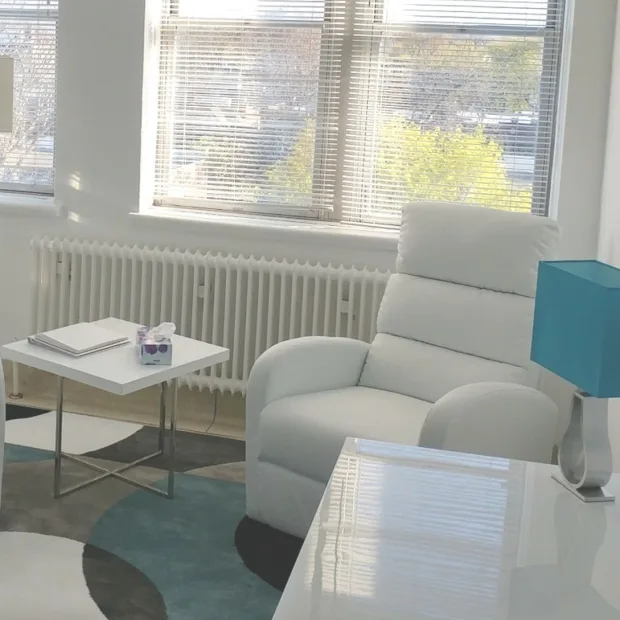

Hypnosis: Definition and How It Works
You already know hypnosis — you already practice it every day
Let's start by demystifying it: the hypnotic state is nothing exotic. You've experienced it absorbed in a novel to the point of missing your stop, or arriving at work "on autopilot" with no memory of the drive. These everyday trances are exactly the state a hypnotherapist helps you return to : deliberately, more deeply, and aimed at a goal. Hypnosis invents nothing new : it uses an ability your brain already exercises several times a day.
For the full mechanism : the brain under hypnosis, the history from Mesmer to Erickson, the detailed evidence, see our guide on solutionshypnose.com.
Hypnosis has entered French hospitals — and that changes the picture
This is the standout development of the past twenty years in France : hypnosis has moved into the operating room. Hospital teams now use it for hypnoanalgesia and hypnosedation (certain procedures are done under hypnosis, alongside or in place of some anesthesia), thousands of caregivers are training in it, and France's INSERM devoted an evaluation report to the practice (INSERM). This medical hypnosis is practiced by healthcare staff, in hospitals, on medical procedures.
Our office-based practice is different — well-being hypnotherapy : stress, sleep, smoking, confidence, fears… Two uses of the same state, complementary but not interchangeable : we do not perform medical procedures, and anything related to medical care goes through your doctor.
Nothing like the stage show
Music-hall shows with their "sleep, I command it" have muddied the picture : the show selects the volunteers who are most receptive and most willing to play along, then leans on the pressure of the crowd. In our office : no audience, your goals, your pace. And one absolute principle: nothing can be suggested to you against your values. You hear everything, you can speak, refuse, or interrupt; no one gets "stuck" (the state is natural, and you come out of it the way you would a daydream); and no one can be hypnotized against their will.
The Benefits of Therapeutic Hypnosis
Video transcript
Hello. Hypnosis still sometimes has a dubious reputation, fuelled in particular by its use in stage shows and by certain films. Hence this video, to talk to you about the value of therapeutic hypnosis and about how we practise it at Solutions Hypnose. First of all, to break down a few misconceptions. 1. No, in a state of hypnosis, you are not asleep. In fact, you can talk with your hypnotherapist under hypnosis, and you generally remember the conversation, sometimes very precisely.
A client with significant attention difficulties was recently surprised to remember his entire conversation under hypnosis perfectly, which didn't often happen to him in everyday life. 2. No, we have no "power" over our clients. And if you don't trust your hypnotherapist, it won't work. Your conscious mind is always there in the background, and you will refuse anything that doesn't fit your values or your mental framework.
So what is hypnosis? First of all, there is an ambiguity in the word, which refers both to the altered state of consciousness we are aiming for and to the techniques we use to get there. So we do "hypnosis" to bring you into a state of "hypnosis". The hypnotic state is a particular state of consciousness: unlike the waking state or REM sleep, in hypnosis you are very relaxed physically and mentally.
Unlike deep sleep or dreaming, you remember what happens. It could be compared to the state reached during meditation, but we now know that the brain waves are different… So it is an altered state of consciousness, a bit like a waking dream. And we all experience the hypnotic state in daily life: for example, when you are on public transport and your mind drifts off as you watch the scenery go by, or when you are watching a film and get completely absorbed in the story, or when you are daydreaming…
So why seek out this state of hypnosis? First of all, it is very pleasant, because you are very relaxed physically and mentally. But above all, in a state of hypnosis, your rational, critical mind "switches off" and your creative brain has more freedom. Instead of talking about your problem by saying "that's just how it is", "it's always been like this", "anyway, I'm not capable…", you will agree to play with your imagination, with "what if it were possible…", or "imagine your problem has disappeared…". And that is where change happens, because our body and mind are fascinating.
Our clients are often experts in their problem, and they have tried everything. You know this already: the harder you try to fall asleep or to stop thinking about your back pain, the less you sleep or the more you focus on your pain. Sometimes they even come to hypnosis to prove to themselves that they really have tried "everything". Or they are referred by their doctor when all the medical tests have been done and there is no physiological reason for the problem.
Well, under hypnosis, the person relaxes, sees their situation differently, makes conscious or unconscious connections with other parts of their life, and becomes creative about new options or solutions. I'm not saying it's magic or that it will solve all your problems instantly, but if you have been going round in circles for too long in a situation that doesn't suit you, therapeutic hypnosis can help you open new doors.
It is a tool for change that is both powerful and delicate, "ecological": you go at your own pace, and we are here to support you at your own pace. Personally, I find it fascinating and very rewarding, because it is the client who finds their own solutions and takes back their power in their life, and the changes are theirs. The Solutions Hypnose team of hypnotherapists is here to support you.
In person near you or by video, it works very well too. Book an appointment now to create the life you want with hypnosis! See you soon!
Hypnotherapy is a complementary form of support and does not replace medical advice, diagnosis, or treatment. If you have any concerns about your health, please consult a physician first.
What a session actually looks like
- The intake conversation first : your situation, your goal, and, if needed, a referral to a healthcare professional before any work begins (our mark of seriousness).
- The induction next : the practitioner guides you into the hypnotic state through voice and focus, in a few minutes, no swinging pendant or staging involved.
- The work : suggestions, metaphors, and visualizations aimed at your goal, always with absolute respect for your values.
- The return : gradual and gentle. Most people feel rested, as though after a nap without actually sleeping.
- Self-hypnosis : from your very first sessions, you learn to recreate the state on your own, since our constant goal is your independence.
A session lasts 50 to 60 minutes (1h15–1h30 for the first one), in-office or by video call — both formats produce equivalent results, since the hypnotic state depends on voice and attention, not physical presence.
What the science says, honestly
The best-documented area is pain : the U.S. National Institutes of Health recognize hypnosis among the useful complementary approaches (NIH — NCCIH), and France's public health service mentions it for chronic pain (Santé.fr). For other areas : stress, sleep, phobias, preparation for medical procedures, habits, results are encouraging but of uneven scientific maturity. What this means for you : hypnosis is serious support with real but variable effects depending on the person and the topic. Anyone who guarantees you a result is lying to you, and our topic guides go into detail area by area, with sources.
Limits and precautions, read before you consult
Well-being hypnotherapy does not treat illness and never replaces a treatment : any physical or psychological symptom is first and foremost a matter for a doctor or a psychologist, and a treatment is never stopped without the prescriber's agreement. Certain situations require the prior agreement of the treating physician, notably ongoing psychiatric conditions.
Finally, since the profession is not uniformly regulated, choose your practitioner on verifiable criteria : named training, a clear framework, honesty about limits.
Why trust the Solutions Hypnose team
A standard of competence : each partner goes through a professional hiring process, takes part in ongoing training and collective supervision, and will tell you frankly when another professional should come first.
Code of ethics : we follow the code of ethics of RITMA (Regroupement des Intervenants et Thérapeutes en Médecine Alternative) and of the ICF (International Coach Federation), notably on client information and respect, confidentiality, and conflict of interest.
What hypnosis can help with
Stress & Anxiety
Emotional Regulation
Self-Confidence
Habits & Behavior
Health & Quality of Life
Performance
Relationships
Hypno-Coaching
Ready to try real hypnosis?
In Office or Online Across France
Offices in Paris, Lille…
And if you live far away or elsewhere in the world, online sessions work very well. Evening slots available.


Frequently asked questions about therapeutic hypnosis
Two related but distinct approaches. Sophrology combines relaxation, breathing, and positive visualization — a regular practice for well-being, often done in groups. Hypnosis is result-oriented: a deeper state of focus used to work toward a specific goal — undoing a fear, changing a habit, preparing for a deadline — usually over a few sessions. Many people practice both; several of our practitioners are trained in both approaches.
No. You stay conscious, you hear everything, you can speak, refuse a suggestion, and stop at any time. Suggestions that go against your values are simply rejected. The puppet-like subject is an image from stage shows, not from the therapy room.
It's impossible: the hypnotic state is natural, and you come out of it spontaneously, the way you would a daydream. If the practitioner stopped talking, you'd emerge on your own within a few minutes, or drift into ordinary sleep and wake up from that normally.
Very likely, to your own degree: most people reach a state that's more than sufficient for the work, and receptivity develops with practice. The three real conditions: being willing, feeling trust, and letting it happen rather than "testing" it.
Because these are two different uses of the same state: hospitals use it for medical procedures (pain, anesthesia); our office-based practice supports everyday life (stress, sleep, smoking, confidence, fears…) over time, with self-hypnosis as an added benefit. One doesn't replace the other: anything related to medical care goes through your doctor, and we'll remind you of that ourselves.
Not by France's national health insurance (outside of the hospital setting). However, many supplemental health plans reimburse several sessions a year through their "gentle medicine" allowance. Check your policy before your first session; we provide an invoice.
Well-being hypnotherapy is complementary support: it is not a medical act and does not replace medical or psychological advice, treatment, or care.

Page written by Nuria Pérez de León
hypnotherapist and NLP coach
partner at Solutions Hypnose.
English version reviewed by David Veilleux
Updated .